Electreon’s wireless charging keeps your fleet moving—charging seamlessly throughout the day to power longer routes with smaller batteries, fewer standby vehicles, and lower costs. It works with your operations, not around them.
The system includes three complementary setups—LINE, DASH, and DOT—used together or separately to deliver energy when and where it’s needed, making top-ups part of the routine.
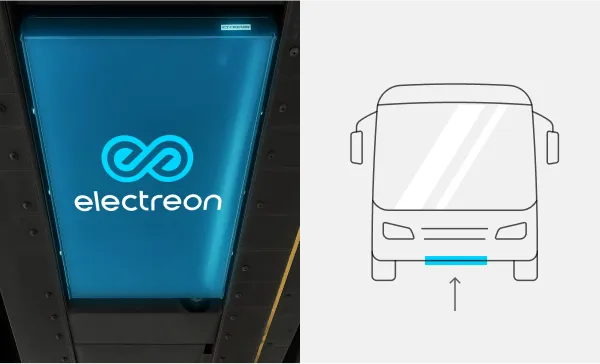
The EV receiver kit, mounted beneath each vehicle, wirelessly receives energy from the road and transfers it to the engine or the battery—and is seamlessly compatible with all three charging setups.
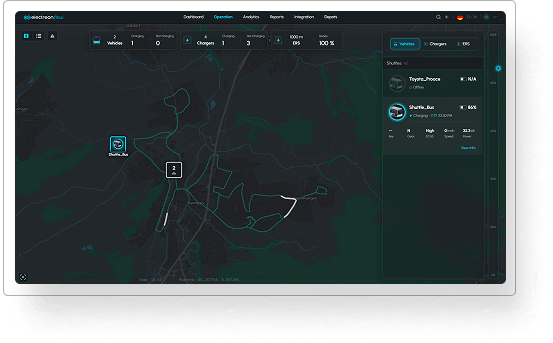
The Flow software provides real-time monitoring and control of operational and charging insights.
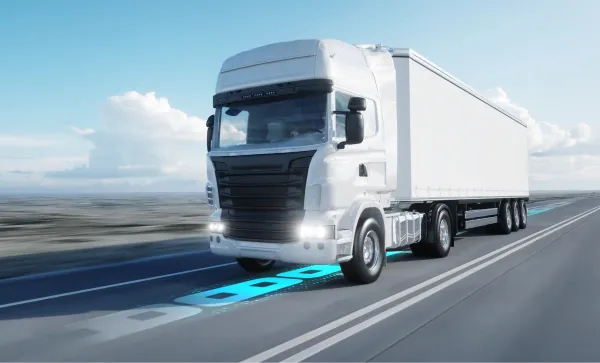
Charges electric vehicles while they drive on equipped streets and highways
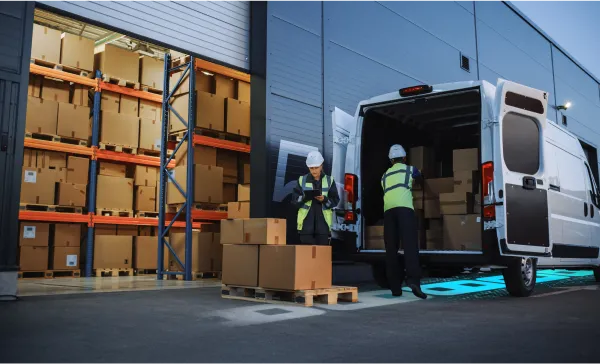
Charges electric vehicles when parked or stopped
Underbody unit that enables seamless wireless charging across all Electreon’s solutions
Intelligent software for real-time monitoring, controlling, and viewing operational and charging insights
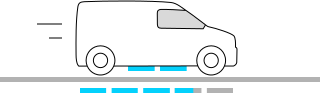
LINE automatically charges any electric vehicle while driving at high speeds on highways and toll roads or cruising dense city streets. It uses Dynamic Wireless Power Transfer (DWPT) to deliver energy from in-road charging coils directly to the vehicle receivers.
Drive 1 minute on a highway stretch equipped with LINE to gain 600 meters of range
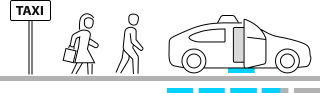
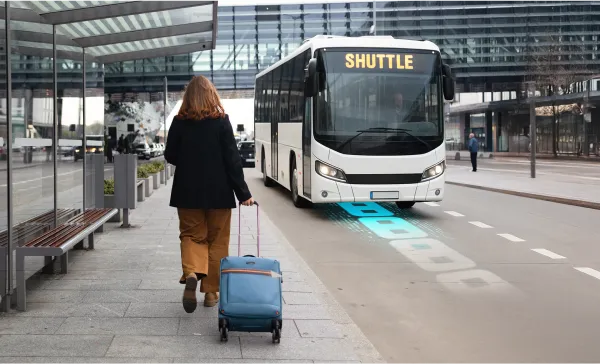
Electreon DASH transforms routine stops—often lasting under a minute—into seamless charging moments. Vehicles automatically receive short bursts of energy that accumulate throughout the day. Ideal for frequent stop-and-go activity at loading docks, bus stops, or traffic queues, DASH adds range without changing routes or disrupting operations.
Stop for 15 minutes and gain up to 12.5 kWh
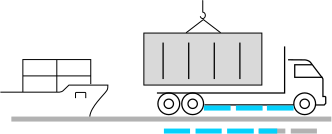
Whether it’s a quick 30-minute stop or overnight downtime, Electreon DOT turns parked time into charging time. This highly efficient wireless charging solution uses Stationary Wireless Power Transfer (SWPT) to optimize energy transfer between ground-installed coils and vehicle receivers—boosting both charging and vehicle efficiency.
Reduce fleet size by 10% without missing a beat.
A receiver unit is mounted beneath the vehicle to capture wireless energy from the charging coils and deliver it to the battery or electric engine. Once installed, the vehicle is fully compatible with all three Electreon charging setups—LINE, DASH, and DOT.
Electreon Flow is a cloud-based platform that provides a unified, real-time view of every wireless charging interaction between vehicles and road infrastructure. Powered by big data and BI, it monitors and manages charging across both vehicle and system components—delivering actionable insights into energy transfer and performance for smooth, efficient operations.
Electreon’s wireless charging hardware consists of three core components: the Management Unit (MU), the Ground Assembly, and the Vehicle Assembly. Together, these components are designed to enable automatic, wireless energy transfer between the electrical grid and the vehicle without cables or manual intervention.
Key components include:
As a result, Electreon delivers a scalable, cable-free charging solution for a wide range of vehicle types and operating environments.
Electreon’s intelligent management software is designed to support real-time monitoring and control of wireless charging operations. Current and planned capabilities include advanced telemetry, remote diagnostics, energy management, and operational insights across vehicles and charging infrastructure.
Key capabilities include:
As a result, operators can optimize system performance, maximize uptime, and manage charging operations remotely.
Electreon’s wireless charging ecosystem includes three complementary products: LINE (Dynamic), DASH (Semi-dynamic), and DOT (Static). Each is designed for a different vehicle operating scenario, allowing operators to deploy the right charging solution at the right point along the route while using the same vehicle-side charging architecture.
Key differences include:
As a result, operators can combine charging modes to maximize uptime, reduce battery size requirements, and create a flexible opportunity-charging network.
Yes. Electreon’s wireless charging system is capable of supporting a wide range of electric vehicles through vehicle-specific receiver configurations. Depending on vehicle integration and power requirements, different vehicle classes, including passenger cars, delivery vans, shuttle vehicles, buses, or heavy-duty trucks—can be supported by the same in-road charging infrastructure, making the system a highly flexible shared charging platform.
Key capabilities include:
As a result, operators can electrify mixed fleets using a single wireless charging network, reducing infrastructure costs while simplifying fleet expansion.
Electreon’s wireless power transfer technology is designed to meet leading automotive, electromagnetic safety, and cybersecurity standards. To the best of Electreon’s knowledge, it is the first wireless charging provider globally to achieve ISO/SAE 21434 certification for automotive cybersecurity, helping ensure secure communication between vehicles and charging infrastructure.
Key standards and certifications include:
As a result, Electreon’s wireless charging solutions combine high-performance energy transfer with globally recognized safety and security standards.
Electreon’s EV receiver kit is designed to integrate seamlessly with existing electric vehicle architectures. The Vehicle Assembly can be deployed through factory integration or aftermarket retrofit, enabling wireless charging across a wide range of vehicle types.
Key integration features include:
As a result, fleet operators can add wireless charging capability while preserving existing vehicle functionality and charging options. This approach simplifies fleet electrification and enables a gradual transition to wireless charging without disrupting existing operations.
Electreon’s wireless tech charges vehicles in motion, idle, or parked by transferring energy via magnetic induction—from coils embedded in the road to receivers under the vehicle—ensuring continuous power for uninterrupted operation.
Charges electric vehicles while they drive on equipped streets and highways
Charges electric vehicles while boarding passengers or crawling in traffic
Charges electric vehicles when parked or stopped
Intelligent software for real-time energy flow insights