Your latest online order didn’t just show up by magic—it rode the fastest-growing wave in transportation.
Last-mile delivery—the final stretch from warehouse to doorstep—is booming. Fueled by the rise of e-commerce giants like Amazon and growing consumer expectations for fast shipping, this once-overlooked segment is now center stage. In the U.S. alone, e-commerce sales hit $310.3 billion in Q3 2025, and parcel volumes reached a massive 22.4 billion deliveries in 2024. That’s a lot of packages—and a lot of trucks.
So what’s powering all this movement? Increasingly, electricity.
Businesses like UPS, FedEx, USPS, Amazon, and DHL are turning to electric delivery trucks to cut emissions, reduce operating costs, and keep up with rising demand. And the shift is happening fast. By 2030, nearly 6 million electric vehicles are expected to be used for delivery and logistics worldwide.
At the same time, the market itself is evolving. Smaller delivery players are growing quickly, traditional carriers are losing some ground, and the last-mile ecosystem is becoming more fragmented—and more competitive—than ever.
This rapid shift is opening the door to new technologies—especially wireless EV charging. With vehicles constantly in motion and no time to waste, last-mile delivery trucks are a natural fit for seamless, cable-free charging.
Companies like InductEV are already making this a reality, bringing high-power wireless charging to fleets worldwide and rethinking how delivery vehicles stay charged and ready.
Every minute—and every mile—counts in the race to your doorstep.
Let’s see how InductEV charging fits in.
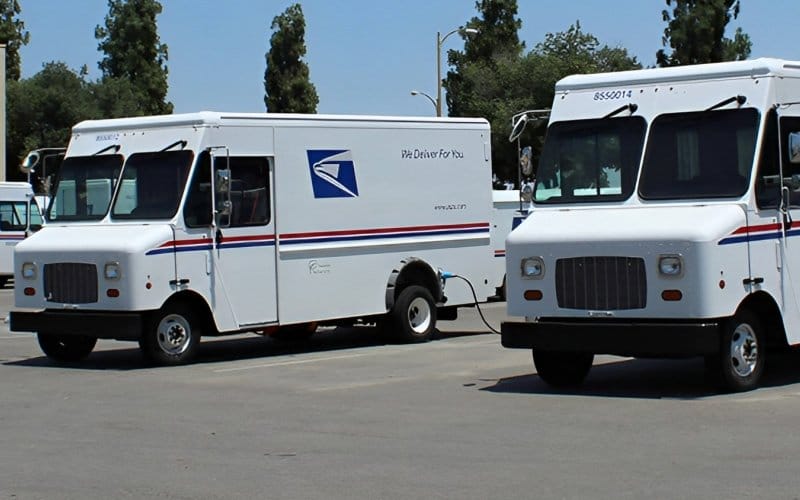
(Photo: Motiv Power Systems EPIC4 electric truck used by USPS, photo courtesy Motiv Power Systems)
Time and efficiency are key in last mile delivery
In the last mile delivery sector, time is of the essence. Traditional charging methods can be time-consuming, with drivers manually plugging in the vehicles and waiting for the batteries to charge. Wireless EV charging offers the advantage of a fully automated process. Charging can begin as soon as the delivery truck is parked over a wireless charging pad, eliminating the need for any manual intervention. This seamless and efficient charging process ensures that the delivery trucks spend less time idle and more time on the road, ultimately enhancing the overall productivity and efficiency of the delivery service.
Inductive EV charging offers increased range flexibility
Range anxiety has been a significant concern for electric vehicle adoption, especially in the commercial sector. Last-mile delivery trucks often need to cover a wide range of distances throughout the day. With traditional charging, businesses often have to plan routes and schedules around available charging stations. However, wireless EV charging infrastructure can be strategically placed at delivery hubs, distribution centers, or even directly along delivery routes. This allows delivery trucks to recharge whenever parked in these locations, providing increased range flexibility and reducing the risk of running out of power during delivery operations. Charging while going about the route and delivery process is much more efficient than having to stop in a depot or stop outside the normal route path.
Wireless EV charging is safer and more convenient
Safety is paramount for any vehicle, especially in busy urban areas where last-mile deliveries commonly occur. Manual charging involves physical connection and disconnection of charging cables, which can be inconvenient and pose potential safety hazards if not done correctly. Wireless EV charging eliminates this risk as it requires no physical connection. By using electromagnetic fields to transfer power, it ensures a safer charging process without the risk of electrical shocks or cable damage.
Further, when vehicles are placed in park during the delivery process, the air conditioning shuts off to save power, thus increasing the temperature in the van, making it uncomfortable for drivers and potentially damaging goods at the same time.
A different approach to infrastructure investment is needed
Deploying widespread charging infrastructure can be a significant challenge for many businesses, especially those with a fleet of delivery trucks operating in multiple locations. Traditional charging stations require substantial initial investment and installation costs in a depot setting, making scalability a complex and expensive task. On the other hand, wireless EV charging pads can be installed along the route and shared, distributing the grid and real estate usage rather than concentrating it in one location. With fewer physical components, because chargers are shared across many vehicles, the installation process is simplified, and businesses can scale up their wireless charging network as their fleet grows. Wireless electric vehicle charging makes a much cleaner installation than plugged EV charging. The charging pads installed in the pavement are barely noticeable compared to unsightly, cumbersome cords on chargers, which must be plugged and unplugged.
Wireless EV charging offers reduced downtime and maintenance
Last-mile delivery trucks are the lifeline of many businesses, and any downtime due to vehicle maintenance or charging can lead to disruptions in delivery schedules and increased costs. Wireless EV charging systems have no moving parts compared to traditional wired charging infrastructure with cables to break, resulting in reduced wear and tear and lower maintenance requirements. This advantage translates into reduced maintenance costs and less downtime for delivery trucks, ensuring a more reliable and efficient operation.
Electric trucks are gaining traction in the last mile delivery market
Examples of last-mile delivery operations include groceries, home service deliveries, restaurant food delivery, retail delivery, and e-commerce. Walmart and Amazon are major players in building their own last-mile delivery networks, rather than relying on providers like FedEx, USPS, and UPS, which handle last-mile delivery for other companies.
In 2022, Walmart planned to purchase a fleet of 4,500 all-electric delivery vehicles from Canoo. Amazon purchased thousands of custom electric delivery vehicles from Rivian in over 100 cities. According to ARS Technica, Rivian has delivered more than 5,000 delivery vans to Amazon, which has used them since 2021. In July 2023, Amazon announced that it would send its Rivian vans to add to an existing fleet in Germany of over 1,000 electric delivery vehicles.
“We are proud to have been selected by Walmart, one of the most sophisticated buyers in the world, to provide our high-tech, all-electric, American-made Lifestyle Delivery Vehicle to add to their impressive logistics capabilities. Our LDV has the turning radius of a small passenger vehicle on a parking-friendly, compact footprint, yet the payload and cargo space of a commercial delivery vehicle. This is the winning algorithm to seriously compete in the last mile delivery race, globally,” said Tony Aquila, investor, chairman, and CEO of Canoo. “Walmart’s massive store footprint provides a strategic advantage in today’s growing ‘Need it now’ mindset and an unmatched opportunity for growing EV demand, especially at today’s gas prices.”
Electric truck companies target the last mile market
Class four is a common size for electric last-mile delivery trucks. Some electric class 4 trucks include the Motiv Power Systems EPIC4 and the Phoenix Motorcars Z500 utility truck. Both of these are commonly used for last mile deliveries.
Marc Anthony (Tony) Nisam, Business Development Manager at Motiv Power Systems, said: “Motiv Power Systems has more than a decade of experience and technological know-how focused on building the safest, most reliable medium-duty commercial electric vehicles in the industry. It’s no wonder that leading companies such as CINTAS, Aramark, Purolator, FedEx, Bimbo Bakeries, USPS, and many more have chosen Motiv to electrify their last mile delivery fleets. Motiv recognizes that our customers need to maximize both payload and range in their commercial electric vehicles. Adding wireless electric vehicle charging capabilities to Motiv vehicles has the potential to reduce the weight (and associated cost) of EV batteries required, which in turn will increase available payload.”
Dave Davis, Marketing Manager at Phoenix Motorcars, said: “Phoenix Motorcars Z500 vehicles can be equipped with either 90-kWh or 140-kWh battery packs offering up to 115 and 150-mile ranges, respectively, and can be fully charged in a little over an hour with a 100-kW Level III charger. The trucks, compared to their equivalent fossil-fueled alternatives, can reduce atmospheric emissions by ~61 tons annually per vehicle, reduce maintenance costs by 75%, and lower fuel costs by 80%.”
Davis continued: “Phoenix has been the leader in medium-duty electrification for over a decade. With 4 million all-electric miles driven on its zero-emission drive systems, Phoenix has unparalleled experience and expertise in helping public and private fleets successfully deploy and adopt electric vehicles into their fleets, cleaning the air quality and providing clean, quiet, and safe zero-emission transportation and mobility for their companies and communities.”
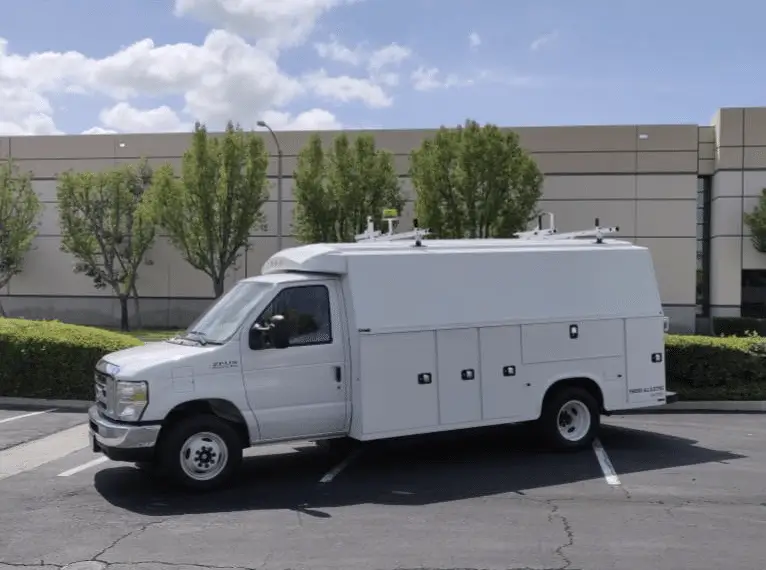
(Photo: Phoenix Motorcars Z500 electric vehicle, courtesy Phoenix Motorcars)
An uptick in businesses seeking sustainable last mile solutions
As businesses increasingly seek sustainable and efficient solutions for their last-mile delivery operations, electric last-mile delivery trucks are gaining popularity. The incorporation of inductive EV charging technology further enhances the appeal of these electric delivery vehicles. The time and efficiency advantages, increased range flexibility, safety, minimal infrastructure investment, and reduced downtime and maintenance make wireless EV charging an ideal solution for electric last-mile delivery trucks. Embracing this technology not only supports the green transition but also brings tangible benefits to businesses and communities by fostering a cleaner, quieter, and more efficient last-mile delivery ecosystem.
InductEV the global inductive EV charging leader
Inductive EV charging by InductEV offers the best economic returns. Compared with plugged charging, inductive EV charging provides operating expenses that are reduced by nearly 50% annually, and the total cost of ownership is about 30% lower. The company specializes in wireless EV charging for large trucks, buses, and other electric commercial vehicles. The InductEV team has deep knowledge of last mile delivery depots, fleets and procedures. Contact the team today.
FAQs
What is last-mile delivery?
The final step of delivery—from a local hub straight to your doorstep.
Why are delivery fleets going electric?
To reduce fuel costs, lower emissions, and meet growing demand sustainably.
What’s the biggest challenge for electric delivery trucks?
Charging without disrupting tight delivery schedules and routes.
How does wireless charging help?
It charges automatically while vehicles are parked—no cables or waiting.
Why is this important for businesses?
Less downtime, lower maintenance, and more efficient, scalable operations.