Ports

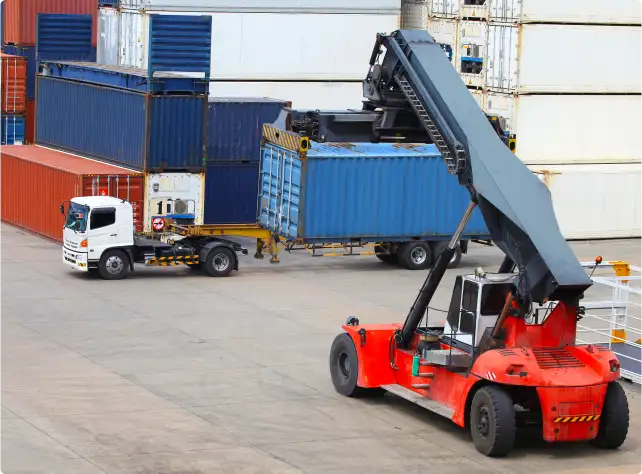
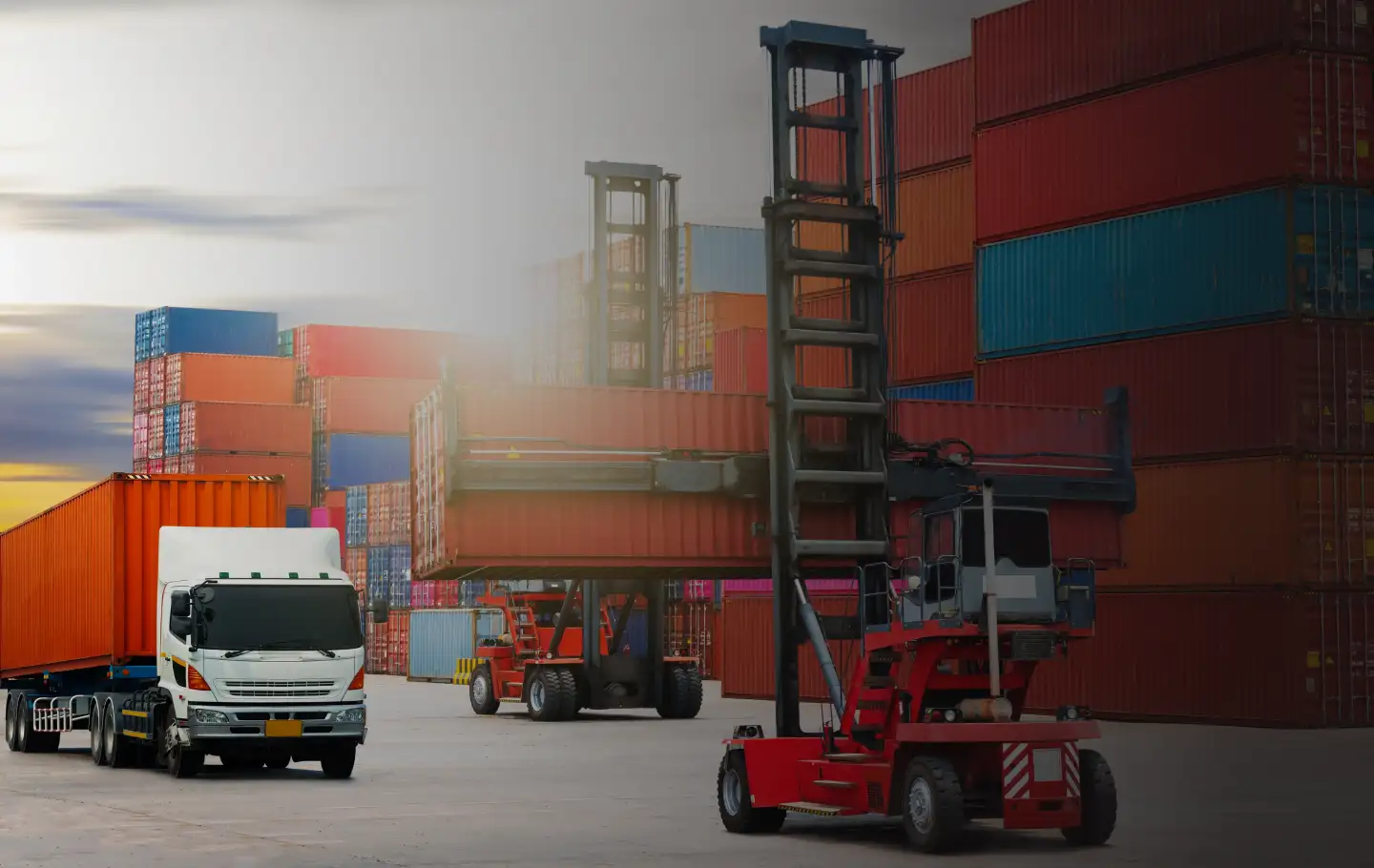
Electreon’s wireless tech powers terminal tractors automatically – while hauling, loading, or waiting. EVs get charged throughout operations, exactly where the work happens. No plugins. No downtime.

One platform charges all port vehicles

Lower infrastructure costs, no need for ultrafast chargers or costly energy storage systems

Complete power solution for ports

Ports 1

Stationary charging during wait time

Tops up vehicles while idling at the depot during shift changes, or waiting to load or unload containers, replacing the 1-charger-per-vehicle model.

Ports 3

Dynamic charging on the move

Charging activates automatically as vehicles drive—whether en route to the ship, rail yard, drayage truck, or any unloading zone.

Gain over

 half a shift’s energy

on a high-traffic stretch of 0.8–1.6 km (0.5–1 mile)

Ports 5

On-the-go charging makes back-to-back shifts happen

Maximize uptime enabling 24/7 operations, longer runtimes, and higher revenue.

*Based on Electreon’s active projects

Charging that covers all the bases

Dynamic and stationary charging, working together to keep operations running nonstop—whatever the fleet needs, whenever it needs it.

One platform powers all

Tested, trusted, and ready to roll—Electreon works with any vehicle or battery.

Ready for driverless days

Keeps autonomous vehicles running all day—safe, hands-free, and fully powered without robot arms.

Ideal for space-challenged terminals

Underground charging delivers hands-free power—no bulky plug-ins, no freezing worries, perfect for tight, high-traffic areas.

Frequently Asked Questions

How does static wireless charging reduce downtime in ports?

Wireless static charging is designed to enable opportunity charging during routine port operations. Vehicles top up automatically while loading, unloading, or queuing, eliminating the need to stop at dedicated plug-in stations. 

Key benefits include:

  • Reduced operational downtime: Charging occurs in the background without disrupting workflows.
  • Faster vehicle turnaround: Vehicles remain available for cargo movement instead of waiting to recharge.
  • Improved loading dock efficiency: Energy transfers automatically through embedded wireless charging infrastructure.
  • Smaller battery requirements: Frequent charging opportunities help maintain State of Charge (SoC) and reduce reliance on oversized battery packs.

Consequently, ports can support continuous 24/7 operations while increasing fleet availability and asset utilization.

Can a single wireless charging infrastructure support multiple vehicle types in a port — including yard tractors and drayage trucks?

Yes. A single shared wireless charging infrastructure is designed to support multiple port vehicle types — including yard tractors and drayage trucks — using the same embedded underground coils. Modular receiver configurations scale with vehicle size and power demand, so heavy-duty trucks can carry multiple receivers while smaller vehicles require fewer, all drawing from the same ground infrastructure.

Key benefits include:

  • Shared charging platform: Multiple vehicle types can share the same embedded charging infrastructure, reducing installation costs and space requirements.
  • Scalable power delivery: Receiver configurations can be adapted to support different vehicle classes and operational requirements.
  • Flexible vehicle integration: Both heavy-duty and light-duty vehicles can be supported by the same charging network.
  • Simplified fleet electrification: Ports can support mixed fleets without deploying separate charging systems for different vehicle classes.

As a result, ports can electrify diverse vehicle fleets with a single, scalable charging infrastructure.

What are the safety standards for high-power energy transfer in port environments?

High-power wireless energy transfer in port environments is designed to meet strict safety requirements. Electreon’s system uses passive underground coils, which are designed to eliminate exposed cables, plugs, and live electrical connections that can be damaged by heavy port equipment.

Key safety features include:

  • Cable-free infrastructure: Vehicles are designed to charge automatically without manual handling of charging equipment.
  • IP68-rated underground coils: Charging components are protected against water, dust, and harsh port conditions.
  • Protected energy transfer: Critical charging infrastructure is embedded beneath the road surface, reducing the risk of mechanical damage.
  • Low electromagnetic field (EMF) emissions: The system operates well below ICNIRP-2010 exposure limits for public and occupational safety.

As a result, ports can deploy high-power charging infrastructure while maintaining safe, reliable operations in demanding industrial environments.

How does the intelligent management software optimize energy flow across the port?

Electreon’s intelligent management software is designed to optimize energy flow across ports through smart load-balancing, power prioritization, and energy management capabilities. The cloud-based platform is designed to support real-time monitoring and control of wireless charging operations, while its roadmap includes additional capabilities intended to help operators reduce grid strain and keep critical vehicles operational.

Key capabilities include:

  • Smart load-balancing: Charging power is designed to be distributed across connected vehicles based on real-time operational needs.
  • Peak demand shaving: The platform is designed to support opportunity charging strategies that distribute energy consumption throughout the day, rather than concentrating demand during overnight charging periods .
  • Power prioritization: Mission-critical logistics vehicles can be prioritized as part of the platform roadmap, to support uninterrupted port operations.
  • Improved grid efficiency: Future platform capabilities are designed to provide operators with greater control over charging schedules, power allocation, and fleet energy usage.

As a result, ports can progressively enhance energy management and support fleet electrification while reducing peak demand and maintaining operational continuity.

Can wireless charging pads withstand harsh maritime weather conditions like salt spray and flooding?

Yes. Wireless charging infrastructure is designed to withstand harsh maritime environments, including salt spray, heavy rain, and flooding. It features in-road coils embedded beneath the asphalt or concrete surface where they are naturally protected from weather exposure and physical impacts.

Key durability features include:

  • IP68-rated infrastructure: Coils are sealed against water and dust ingress, even in demanding port conditions.
  • Weather-immune design: Underground installation is designed to protect the system from salt corrosion, extreme temperatures, and flooding.
  • No moving parts: The charging coils contain no mechanical components that can wear out or fail.
  • No active electronics in the road: Passive underground coils are designed to enhance system reliability and reduce maintenance requirements.

As a result, ports can deploy wireless charging infrastructure that operates reliably in challenging maritime environments year-round.

How does wireless power transfer improve the Total Cost of Ownership (TCO) for port and logistics fleets?

Wireless power transfer improves Total Cost of Ownership (TCO) by reducing both vehicle costs and fleet size requirements. Because vehicles can receive frequent opportunity charging throughout the day, operators can significantly reduce battery capacity—by up to 50%* for heavy-duty trucks—saving tens of thousands of dollars in battery-related capital expenditure (CAPEX) per vehicle.

Key cost benefits include:

  • Battery size reduction: Opportunity charging can enable smaller batteries, lowering vehicle purchase costs and reducing vehicle weight.
  • Lower CAPEX: Reduced battery requirements can deliver substantial upfront savings across large fleets.
  • Reduced charger-to-vehicle ratio: Opportunity charging enables multiple vehicles to share charging infrastructure throughout the day, reducing the number of chargers required across the fleet.
  • Vehicle replacement parity: Vehicles can remain productive throughout their shifts, eliminating the need to purchase additional EVs to compensate for charging downtime.
  • Higher asset utilization: More time in operation translates into greater fleet productivity.

As a result, ports and logistics operators can accelerate electrification while lowering fleet ownership costs and maximizing return on investment.

*Figures reflect specific project or test conditions; results may vary by site, vehicle integration, and deployment configuration.

Unpack the power of ports

Download the Ports one pager