Electreon’s wireless charging keeps campus shuttles and vehicles running all day—charging seamlessly while boarding, parked, or on the move. Embedded underground, the system is space-efficient and cuts energy, operational, and infrastructure costs. A living lesson in real-time green mobility—ready for driverless days.
Delivers all-day power without detours to the depot—keeping shuttles on the road and right on schedule.
Tops up shuttles while slowing down to board passengers or pulling out of stations—keeping buses powered without battery level worries.
Automatically charges vehicles as they drive along campus routes—eliminating the need for charging stops.
Electrify
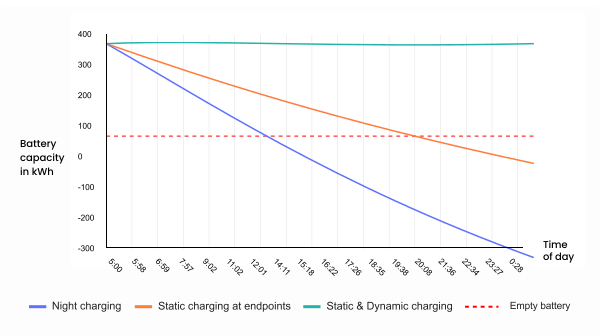
less than 15%*
of the route to enable 24/7 operation
*Data from Haifa Metronit BRT where 12.6% of the route was electrified
Top-up charging keeps your battery in the sweet spot—full of energy and ready to go, with more range and fewer charging delays
One modular platform can power the entire fleet, so expansion requires no additional infrastructure.
Extend battery life, trim energy bills, and cut TCO.
Built for the future of driverless transport—ready today. Keeps shuttles running without downtime or bulky plug-ins.
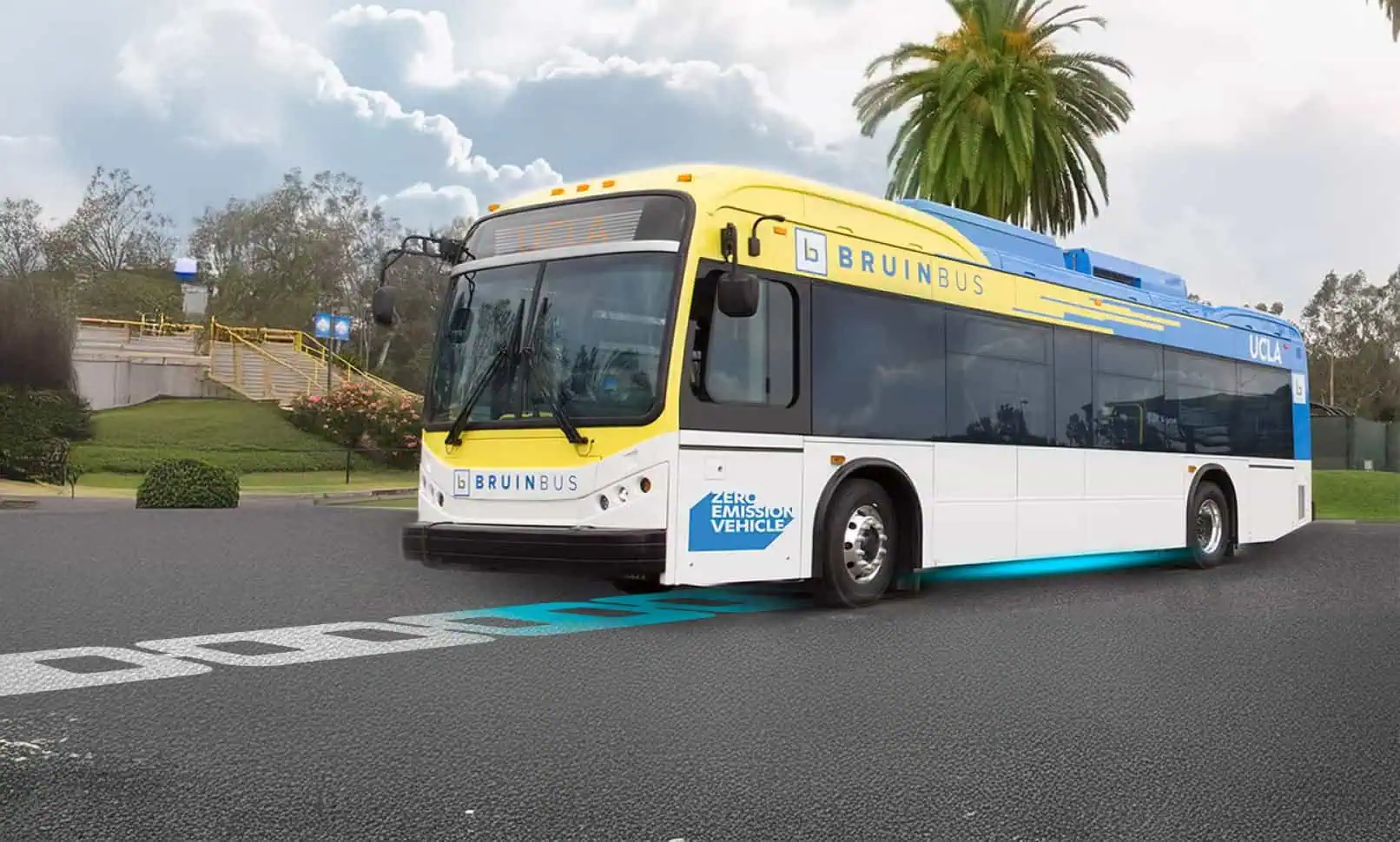
Electreon’s campus deployment brings dynamic and stationary wireless charging to UCLA’s BruinBus fleet. Backed by a $20M state grant, the system enables all-day, zero-emission operations—supporting UCLA’s climate goals and Olympic readiness ahead of the 2028 Los Angeles Games.
Showcase bold sustainability that students embrace, and set the standard for universities everywhere.
University campuses can achieve zero-emission transportation goals by integrating wireless charging directly into shuttle and bus operations. By combining static charging at key stops with dynamic charging along campus routes, vehicles can receive frequent opportunity charging throughout the day, enabling a seamless transition to electric fleets without disrupting service schedules or campus activities.
Key benefits include:
As a result, universities can accelerate sustainability goals and transition to zero-emission transportation with minimal operational disruption.
Wireless energy transfer can reduce the cost and complexity of electrifying university shuttle fleets by enabling significant battery size reduction. Because shuttles receive frequent opportunity charging throughout their routes, they can operate without oversized batteries to operate for an entire day between charging sessions.
Key benefits include:
As a result, universities can accelerate fleet electrification while lowering upfront vehicle costs and supporting long-term sustainability goals.
*Figures reflect specific project or test conditions; results may vary by site, vehicle integration, and deployment configuration.
Static wireless charging improves shuttle fleet availability by enabling opportunity charging during normal passenger operations. Chargers installed at pick-up and drop-off locations are designed to allow shuttles to charge automatically during brief 2–5 minute stops, without driver involvement or service interruptions.
Key benefits include:
As a result, universities can maintain reliable shuttle service while maximizing fleet utilization and operational efficiency.
*Figures reflect specific project or test conditions; results may vary by site, vehicle integration, and deployment configuration.
Yes. Electreon’s wireless charging infrastructure is designed to preserve campus aesthetics through a low-profile, embedded design. The charging coils are embedded beneath existing asphalt or concrete surfaces, creating invisible infrastructure that integrates seamlessly into campus roads, shuttle stops, and pedestrian areas.
Key benefits include:
As a result, universities can electrify shuttle fleets while maintaining a clean, safe, and visually appealing campus environment.
Yes. Electreon’s wireless charging system is capable of supporting multiple vehicle types to share the same charging infrastructure. Depending on vehicle integration and power requirements, different vehicle classes, including campus shuttles, security vehicles, maintenance vans, service fleets, delivery vehicles, and compatible passenger EVs—can be supported by the same in-road coils , creating a shared charging platform across the campus.
Key benefits include:
As a result, campuses can turn roadways into a shared charging asset that supports diverse fleets, simplifies infrastructure planning, and accelerates electrification.
Yes. Electreon’s wireless charging system is designed to operate safely in high-traffic campus environments. The infrastructure contains no exposed electrical cables, plugs, or live connections, helping eliminate many of the safety risks associated with conventional charging equipment.
Key safety features include:
As a result, universities can deploy wireless charging infrastructure while maintaining a safe environment for students, staff, and visitors.
Charges electric vehicles while they drive on equipped streets and highways
Charges electric vehicles while boarding passengers or crawling in traffic
Charges electric vehicles when parked or stopped
Intelligent software for real-time energy flow insights