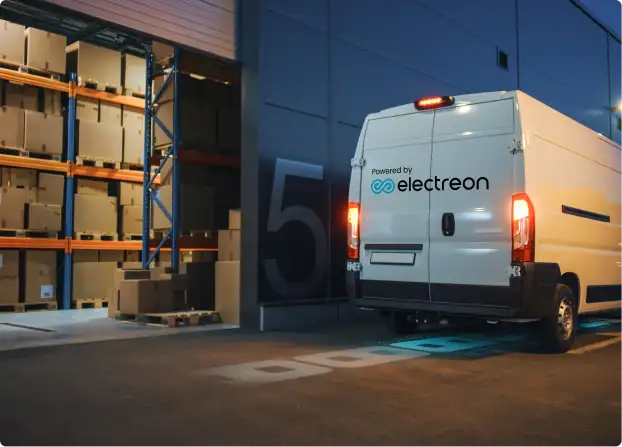
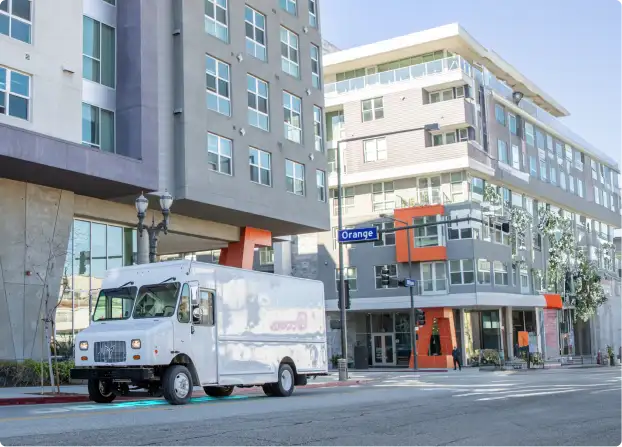
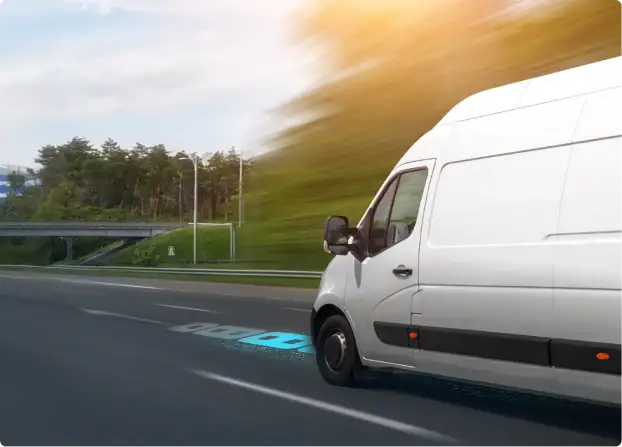
Electreon’s grid-friendly wireless charging is built to match the fast pace of last-mile ZEV delivery fleets, keeping them powered from dock to doorstep. Operators cut downtime and costs while hitting ambitious emissions targets. The system is built right into the road, so cables and curbside clutter simply disappear.
Frequent top-ups keep vans rolling all shift long, enabling smaller, lighter batteries that cut costs. With charging built into the route, cross-town detours and backup vehicles are a thing of the past.
Smart, shared charging saves space and cuts costs—powering 6–12 vans at once, in any layout, while parked or loading at busy logistics hubs.
Hands-free, automatic top ups while pulling into curbside zones or retail stores—turning drop stops into charging opportunities.
Charge on the move along city streets and green zones—without charging breaks, enabling 24/7 operation.
Vans top up wirelessly while queuing at tight docks—where plug-ins won’t even fit—or pausing at busy downtown drop-offs.
A single system grows with your fleet—every new van charges on the same flexible platform, in any layout or orientation.
Perfect for dense urban areas—embedded under the road, clutter-free, and built for zero-emission mobility.
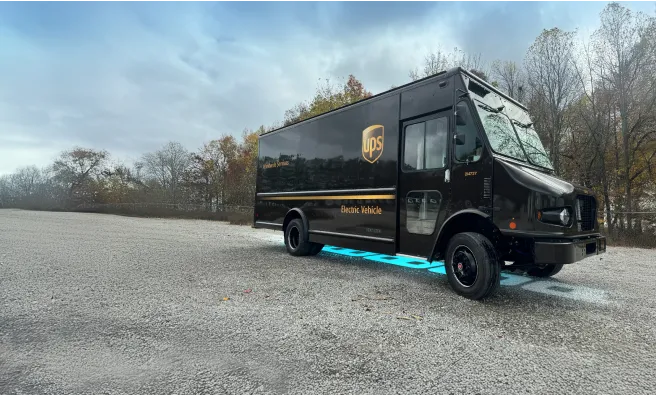
Electreon will deploy wireless charging at a UPS depot in Detroit and integrate its tech into an Xos stepvan—part of UPS’s last-mile delivery fleet. The project cuts downtime, lowers costs, and builds on Detroit’s first public wireless EV road.
Want to boost your daily range by as much as 50%?
Wireless charging is designed to help reduce range anxiety by bringing energy directly to the delivery route. Instead of relying solely on depot charging, delivery vans receive frequent continuous top-ups through dynamic charging on key transportation corridors and static charging at distribution centers, loading docks, and delivery hubs. As a result, vehicles can stay on route longer with fewer charging-related interruptions.
Key benefits include:
As a result, last-mile delivery fleets can operate more efficiently while maximizing vehicle availability, minimizing downtime, and increasing route flexibility.
Yes. Static wireless charging can be integrated directly into loading docks to enable charge-while-loading operations. In Electreon’s commercial pilot with UPS in Detroit, wireless charging is deployed at a UPS depot and integrated into an Xos step van, helping convert routine loading and unloading time into productive charging time.
Key benefits include:
As a result, delivery fleets can reduce downtime while keeping vehicles powered from dock to doorstep.
Wireless charging can significantly reduce the Total Cost of Ownership (TCO) for last-mile delivery fleets by reducing battery costs, improving vehicle utilization, and lowering overall fleet capital requirements. Because vehicles receive frequent opportunity charging throughout their routes and at logistics hubs, they can operate with smaller batteries while maintaining daily range requirements. Charging is designed to occur automatically, eliminating the need for drivers or fleet personnel to handle charging operations.
Key benefits include:
As a result, delivery operators can accelerate fleet electrification while lowering ownership costs and maximizing the value of their vehicle investments.
Yes. Electreon’s wireless charging solution is capable of supporting multiple vehicle types on the same infrastructure, through vehicle-specific receiver configurations. Depending on vehicle integration and power requirements, different vehicle classes, including delivery vans, heavy-duty trucks, shuttle buses, and public transit vehicles—can be supported by the same in-road charging segments, creating a shared charging platform across the city.
Key benefits include:
As a result, cities and fleet operators can accelerate electrification while reducing infrastructure costs and improving charging network efficiency.
Yes. Electreon’s wireless charging infrastructure is designed to scale efficiently across large urban logistics hubs. Unlike conventional plug-in charging systems that often require a 1:1 charger-to-vehicle ratio, Electreon’s shared wireless charging architecture is designed to enable multiple vehicles to use the same infrastructure throughout the day.
Key scalability benefits include:
As a result, logistics operators can scale fleet electrification while minimizing infrastructure costs and maximizing valuable urban real estate.
*Figures reflect specific project or test conditions; results may vary by site, vehicle integration, and deployment configuration.
Yes. Electreon’s wireless charging system is designed to operate reliably in challenging outdoor environments. Because the charging coils are embedded beneath the road surface and energy is transferred through magnetic induction, the system is designed to be weather-resistant and unaffected by rain, snow, ice, or mud.
Key reliability benefits include:
As a result, last-mile delivery fleets can maintain reliable operations year-round without weather-related charging interruptions.
Charges electric vehicles while they drive on equipped streets and highways
Charges electric vehicles while boarding passengers or crawling in traffic
Charges electric vehicles when parked or stopped
Intelligent software for real-time energy flow insights