

Big vehicles are going electric—fast. Freight trucks are already transforming, and one key question remains: how do you charge them efficiently, safely, and at scale?
That’s where wireless charging comes in. Around the world, it’s gaining momentum for heavy-duty fleets—offering better safety, lower operating costs, and greater convenience, with no cables or manual handling required.
The timing couldn’t be better. Global sales of medium- and heavy-duty electric trucks topped 90,000 units in 2024, and total EV numbers are expected to more than triple by 2030. More strikingly, electricity demand is rising even faster—driven by high-mileage electric trucks.
In the U.S., growth is steady. EV sales are increasing at around 10%, with e-trucks expected to reach roughly 11% of total vehicle sales. At the same time, about $3 billion in public funding is being directed toward building charging infrastructure for heavy-duty fleets.
But infrastructure is struggling to keep up, with plug-in charging facing challenges from grid constraints to scaling megawatt-level charging across key routes. As fleets grow, charging needs to be faster, simpler, and more reliable.
That’s where wireless charging stands out—turning a constraint into an advantage.
Loren McDonald, CEO of EVAdoption, LLC said:
“Wireless charging is a game charger, especially for commercial fleet managers and their employees who are transitioning to driving electric trucks and buses. One of the biggest advantages is opportunity or graze charging, where a vehicle charges and adds range throughout the day when a driver stops over a dedicated wireless charging coil while loading passengers on a bus or a union port tractor driver taking a 10-minute morning work break. Besides potentially reducing the size of the battery pack for the vehicle and lowering its initial cost, fleet managers can sleep well at night and not worry about drivers forgetting to plug the vehicle in at the end of their shift or deal with broken or vandalized charging cables and connectors. And because convenience charging with a wireless system adds range throughout the course of the duty cycle, it means little or no time downtime must be allocated just for charging.”
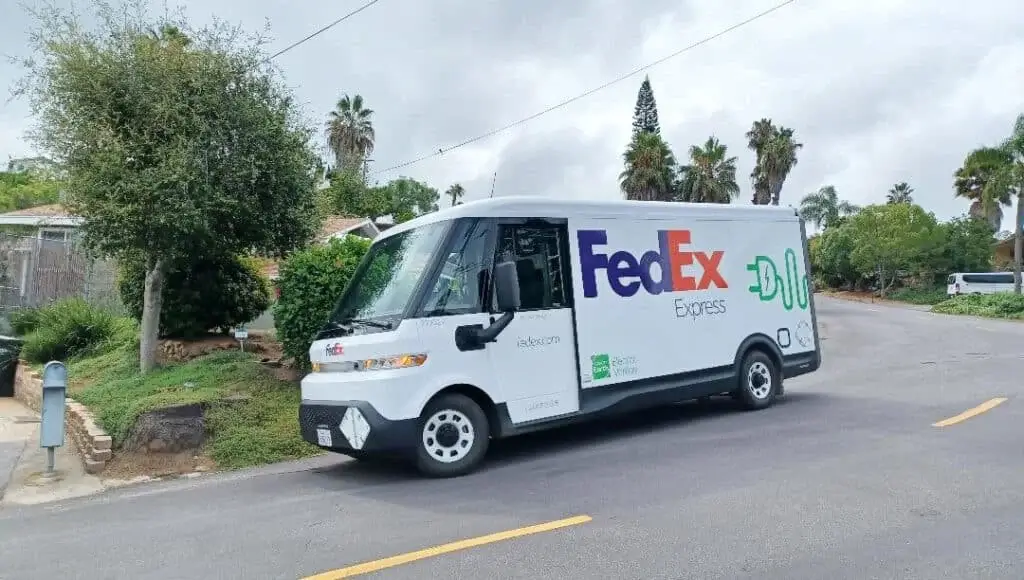
(Image: An all-electric FedEx truck manufactured by BrightDrop makes deliveries in Southern CA. Photo courtesy BillPierce.net)
Electric transit bus fleets save significantly on total cost of ownership
An example of a successful heavy-duty wireless EV use case is Link Transit Company in Washington. InductEV installed a wireless charging system for Link Transit’s electric bus fleet for the first time in 2017. The company installed four 300kW inductive chargers in 2021, which are operating at two public transit locations in Washington.
Electric bus fleets are a very appropriate use case for wireless EV charging, which is a major reason for the great success that Link Transit is enjoying with InductEV’s charging equipment. Wireless charging pads are installed at the bus stops, where buses wait for riders to board. Also, buses are parked over charging pads during shift changes and driver rest breaks. These are ideal opportunities to recharge the bus, without the hassle of the driver needing to plug in. Charging begins immediately as soon as the bus is parked on top of the charging pad. Charging pads are also known as ground assemblies (GA).
InductEV, the leader in wireless EV charging, has installed highly efficient wireless EV charging stations for several bus fleets across the United States. Those include wireless chargers for mass-transit buses in Indianapolis, IN, Martha’s Vineyard, MA, and soon to deploy across Washington, Oregon, California, and other states.
Charging the bus fleet while stopped along the daily route is highly efficient and offers significant cost savings. Wireless charging is less expensive than wired charging because of fewer chargers needed per vehicle, less real estate cost and space, and lower maintenance costs due to lack of cables and connectors to break. One of the additional financial benefits of wireless is that smaller batteries can be utilized in the buses, as they get recharged more frequently than buses that use plugged charging. Tighter control of the battery state of charge also means that battery life is extended beyond the life of the vehicle, eliminating the need for battery replacement and recycling.
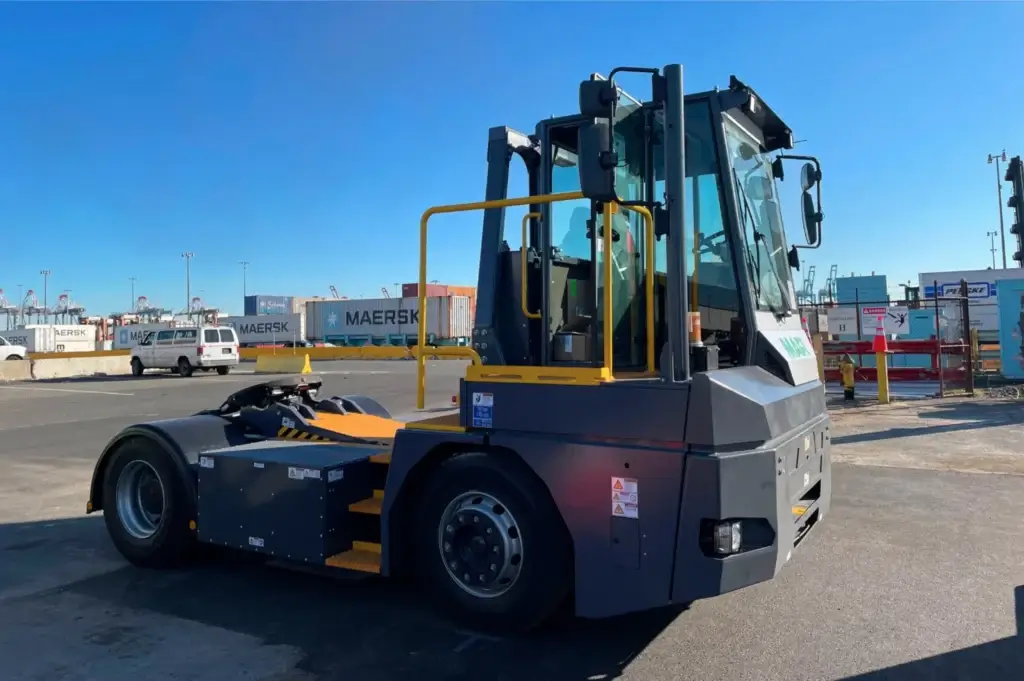
Electrification of drayage trucks is progressing fast
Drayage trucks and yard tractors haul goods from ports to warehouses, train depots, and other destinations. These fleets are one of the electric vehicle types that are experiencing fast growth in electrification in large part due to carbon reduction mandates in the race to get to net zero emissions. Fleet managers realize there are significant cost savings for switching from diesel refueling to electric fleet charging. Concern for the environment is a growing factor in companies making these decisions. California released news that the state would end the sales of internal combustion engine (ICE) trucks including freight, drayage, refuse, and delivery trucks by 2036. Other states are expected to follow suit, as ports are well known for their significant environmental issues caused by a proliferation of diesel exhaust-based smog.
Wireless EV charging is the best choice for the yard tractor and drayage truck use cases. The trucks frequently stop throughout their daily routines for loading, unloading, driver rest breaks, and more. These are all opportunities for the trucks to recharge wirelessly, without the need for the driver to plug in the vehicles. This saves time and is more efficient. Like the bus fleets, the truck fleets can use smaller batteries because they charge throughout their shifts. Many unions have strict rules about the exposure of employees to high-power electric cords and outlets, creating a major problem for using plugged charging at these locations. In some labor markets plug in chargers are being prohibited by new labor work rules.
Emergency vehicles are a perfect use case for wireless EV charging
Any location where fleets of vehicles need to recharge are great examples of where wireless EV charging saves time and money. In fire stations, the fire trucks are parked when not in use. Charging these trucks is easier, safer, and more convenient by using wireless electric vehicle charging rather than plugged charging. Among fleet charging solutions that are available, wireless EV charging is the clear choice for fire trucks and other electric emergency vehicles.
Police and EMT vehicles are other types of vehicles that can benefit from wireless EV charging. Like the fire trucks, police and EMT vehicles park at stations when not in use. The convenience of immediate charging when parking the vehicles over the charging pad is a significant benefit.
Often, in the use cases above, vehicles are parked in dense urban areas where real estate is at a premium and the space required for plug-in chargers is unavailable. Wireless chargers require no additional space.
Wireless electric vehicle charging is an excellent solution for last mile delivery trucks
Electrification of last mile delivery trucks is growing fast. Delivery services such as FedEx and UPS have added significant numbers of electric vehicles to their fleets. FedEx has included electric trucks in their fleets manufactured by BrightDrop, a subsidiary business of General Motors. There are significant economic benefits in moving to EV and wireless charging in addition to positive public relations the companies receive by doing their part to fight against climate change.
Delivery depots are highly efficient, and real estate is at a premium. As the trucks are getting loaded with packages, they could be wirelessly charging. Wireless charging takes up no additional real estate, and provides a cleaner, more integrated installation.
Charging in route also reduces battery size, creating more payload opportunity on the vehicle, increasing its capital efficiency. This charging methodology also keeps the battery in a narrow state of charge extending the life of the battery well beyond the life of the vehicle and eliminating the need for battery replacement and recycling. Cable and charger maintenance costs are eliminated using wireless charging given the elimination of moving parts in the InductEV system.
Inductive EV charging by InductEV offers the best economic returns for many types of electric fleets. When compared with plugged charging, inductive EV charging provides operating expenses that are reduced by nearly 50% annually. The total cost of ownership is about 30% lower. The company specializes in wireless electric vehicle charging for large trucks, buses, and other electric commercial vehicles. The InductEV team has deep knowledge of heavy-duty vehicle depots, fleets and procedures. Contact the team today.
FAQs
Why is wireless charging important for big trucks?
It reduces downtime, simplifies operations, and helps overcome grid and infrastructure limits.
What’s wrong with plug-in charging for fleets?
It can be slow, hard to scale, and limited by grid and infrastructure constraints.
How does wireless charging work for trucks?
Vehicles charge automatically when parked over embedded charging pads.
Which fleets benefit the most?
Port- and heavy-duty trucks and delivery vehicles that run long hours and can’t afford charging stops, as well as emergency fleets with frequent stops.
Does wireless charging reduce costs?
Yes—through lower maintenance, smaller batteries, and more efficient operations.


