Why the old charging model falls short
In a world that’s already ditched cords for phones, headphones, and even vacuums, why are electric vehicles still shackled to bulky charging cables?
Plug-in EV charging feels stuck in the past: stations fail nearly half the time, mostly from hardware and payment glitches. Cables waste driver time, take up valuable space, and sit exposed to weather and vandalism. Worse, they’re trip hazards for buses, trucks, and cars that can run over or crash into them.
Ultra-fast chargers try to speed things up—but they’re pricey, strain the grid, and still cling to the “gas station” model. A single 1.2 MW charger can gulp as much electricity in an hour as two or three homes use in a month. Bigger batteries? They only add cost, weight, and environmental impact.
At the end of the day, plug-in charging still mimics gas stations: stop, charge, go. But EVs aren’t gas cars—and the grid wasn’t built for endless plug-and-wait charging. What’s needed is something smarter: seamless, scalable, and built for how vehicles actually move.
Wireless charging: cost-saving, grid-friendly, and scalable
Electreon has developed a wireless EV charging system that makes the road itself part of the energy solution. Seems complex? It’s surprisingly simple: wireless charging works (Link to product video) much like powering your phone on a pad—only the pad is in the road and the “phone” weighs a few tons. And, yes the vehicle just needs Electreon’s wireless receiver.
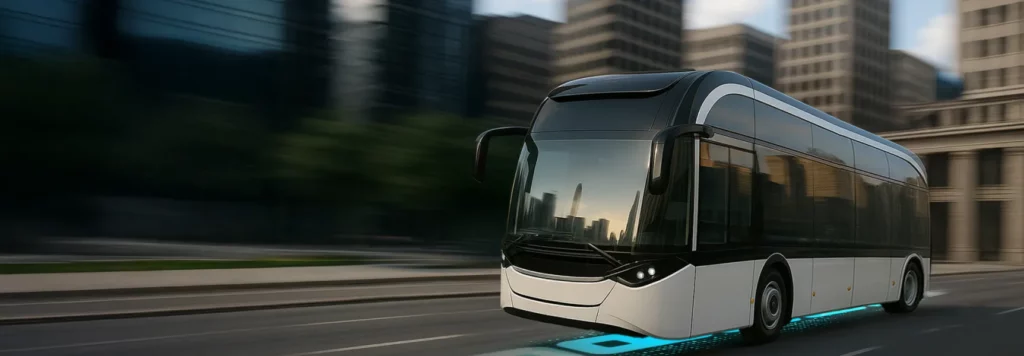
Using magnetic induction, the system sends energy invisibly from coils embedded under roads or parking areas straight into the car. When a vehicle with an Electreon receiver kit drives or pauses above a coil, it charges automatically.
Cars top up as they move, wait at a light, or sit parked—without plugs, downtime, or fuss. It’s safe, tamper-proof, and nearly maintenance-free. A cloud-based platform manages charging and shifts demand to off-peak hours, reducing costs and easing grid strain. The result: lower total cost of ownership, less battery wear, and reliable energy delivered exactly where it’s needed.
Why it’s the only charging solution that makes sense
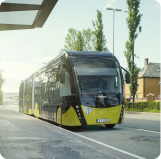
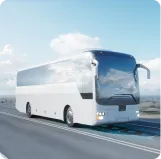
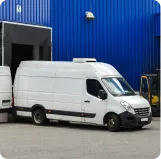
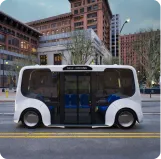
Let’s face it: nobody dreams of owning more cables. Wireless charging eliminates the hassle, the tripping hazards, and the endless “where’s the plug?” game. More importantly, it’s built to scale. Fleets don’t have time to stand around charging, and neither do their drivers. Wireless simply blends into daily operations: buses charge while boarding passengers, trucks while cruising highways, vans while loading at docks, and taxis while inching through pickup lines.
And here’s the mind-boggler: you don’t need wireless in every road. Research by Professor Yudai Homma at the University of Tokyo shows that installing it in less than 1.6% of city streets—at stops, slowdowns, intersections, and lineups—could keep vehicles running with virtually unlimited range.
Is wireless charging really realistic in real-world environments?
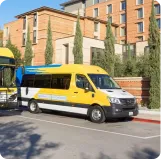
The short answer: absolutely. Nearly 30 projects are already live around the globe. Electreon’s system powers buses and freight trucks in Germany and France, proven suitable for BRT lines in Trondheim, Norway, and will soon charge UCLA shuttles—just in time for the 2028 Olympics. In Detroit, it’s embedded in Michigan’s first public wireless charging road, set to power UPS Xos electric vans, as part of a project led by Michigan Department of Transportation.
The longer answer: scaling up for heavy freight takes time, but momentum is already building. Thousands of kilometers are planned. South of Paris, for example, the French government has launched an ERS (electric road system) pilot on the A10 highway, where EVs charge as they drive using Electreon’s tech. A recent study showed wireless ERS could slash freight emissions by 86% and help France hit net zero by 2050. It’s part of a bold plan to electrify 9,000 km of highways by 2035.
Why? Because heavy-duty vehicles must go electric, and ERS is the only practical way to get them there. Electreon makes it possible. One system powers it all—buses, trucks, taxis, delivery vans, ride-hailing fleets, even private cars. From highways and BRT lanes to curbsides, depots, and terminals, the same invisible infrastructure keeps everything moving. And with strong backing from automakers, governments, and policymakers across Europe and the U.S.—the shift to wireless isn’t a matter of if—it’s only a matter of when.
What’s the business model?
Flexible models make adoption easy. Operators can pay per use, or choose Charging-as-a-Service (CaaS) with a flat monthly fee that covers energy and software. Think toll roads: your vehicle is recognized and billed when you pass through. Same with wireless—drive or park over a charger, and billing happens automatically.
The hidden glue of tomorrow’s transport
Picture wireless charging as the invisible glue holding future mobility together. Shared cars, driverless shuttles, electric trucks—all need a charging system that doesn’t rely on human hands or wasted downtime. And the demand is already rising: The IEA projects that by 2030, one in three new buses sold globally will be electric. Consumers are on board too: a 2025 McKinsey survey found that 38% of non-EV owners are ready to switch—if charging improves. Wireless charging may be the missing link, not just to EV adoption, but to a better EV experience. As vehicles go electric and start driving themselves, Electreon’s system is already built for what’s next: infrastructure that finally fits how we move.
Always on, always ready
Next time you drop your phone on its wireless charger, imagine it scaled up. The future of mobility isn’t about plugging in—it’s about powering up without even noticing. Wireless charging is here, already changing how fleets, cities, and drivers use energy. The question isn’t if the world will go wireless—it’s how soon.