

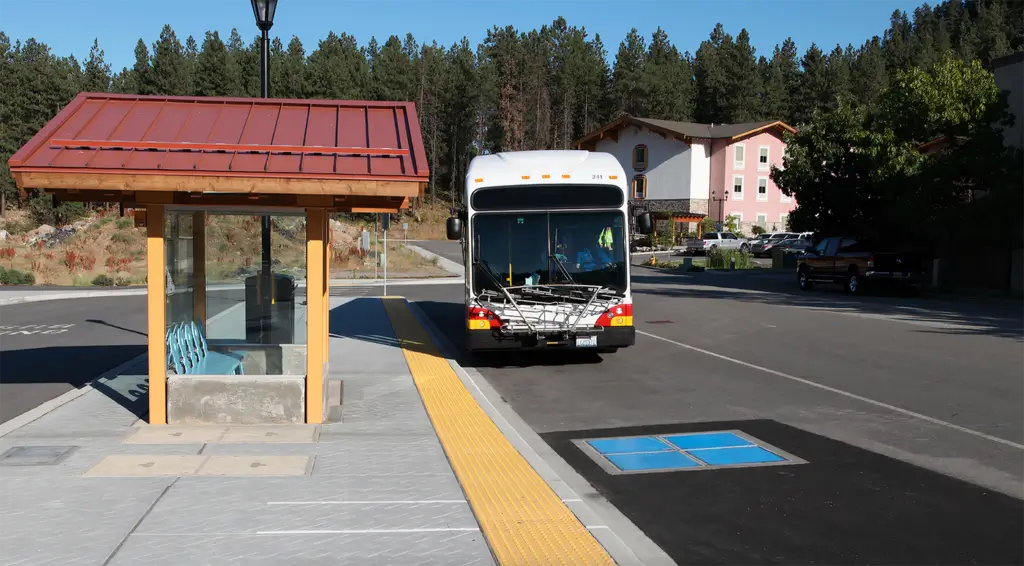
Market growth for electric buses worldwide and in the United States
MarketsandMarkets predicts that the global electric bus market will grow at a compound annual growth rate (CAGR) of 41.7% from 2023 to 2030. According to Straits Research, the U.S. electric bus market is expected to grow more slowly, at a CAGR of 13.09% during the same period. Markets outside the United States, such as China and the European Union, are much farther ahead in adopting Battery Electric Buses (BEBs). In China, most of their bus fleets are already electrified.
The operational advantages of in-route wireless charging
“In-route wireless electric vehicle charging offers a solution to challenges with wired charging so transit agencies and riders can enjoy the benefits of electric vehicles with increased safety and efficiency. In-route wireless charging enables the use of smaller batteries in electric buses, reducing weight, cost, and increasing efficiency while avoiding the expense and logistical challenges of wired charging systems” said Jeff Friedman, Founder/CEO of The Kensington Collaborative. “This contributes to a more sustainable and economically viable public transportation system.”
Electrification momentum in the United States
The transition to electric public transportation buses is gaining momentum in the United States. Several cities, such as Los Angeles, Seattle, and New York, have committed to converting their public bus fleets to 100% electric. This shift is supported by federal grants to promote clean energy and reduce the country’s carbon footprint. Furthermore, companies are leading the charge in manufacturing electric buses, innovating with longer-lasting batteries and efficient designs. The adoption of electric buses in the U.S. is not just a trend but a significant move towards a more sustainable future.
Current problems with charging electric bus fleets using plugged chargers
While transitioning to electric buses offers numerous benefits, it poses serious challenges regarding charging infrastructure. The current primary method for managing electric bus fleets is wired plug-in charging, which has several inherent drawbacks. Requiring one charger per vehicle, this depot-based process is highly time-consuming. It demands substantial real estate for charging stations and precise vehicle positioning, alongside heavy upfront capital investments that strain city budgets. Furthermore, requiring every bus to return to a centralized depot limits route flexibility and overall operational efficiency. These infrastructure and logistical bottlenecks must be addressed to ensure the successful, widespread adoption of electric public transit.
Safety concerns and physical hazards of plug-in stations
While wired EV chargers have been instrumental in the adoption of electric vehicles for bus fleets, they present specific safety concerns. The most prominent is the risk of electric shock or fire due to faulty installation, misuse, or damage to the charging cable. Damage can occur by the cable and the charger getting hit by a vehicle. Additionally, cables can be a tripping hazard, causing physical harm. Furthermore, exposure to extreme weather conditions while plugging in high-power electric cables can lead to a further risk of serious electrical accidents. There are also significant safety concerns by having so-called ‘bus-barns’ full of lithium-ion batteries, which, when near one another, create a highly dense fuel source in case of fire.
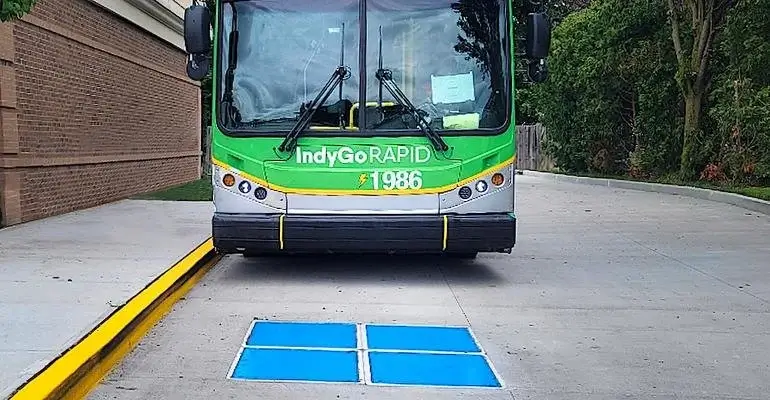
(Image: Electric bus preparing to stop over a wireless charging pad for recharging)
In-route wireless electric vehicle charging, a game-changer for public transportation buses
In-route wireless electric vehicle charging is a significant improvement for charging electric bus fleets in public transportation, offering a solution to the challenges posed by wired charging. Primarily, in-route wireless EV charging is divided throughout the day, as it can occur in small increments whenever the bus stops for passenger boarding and other routine stops, such as driver rest breaks and shift changes. This ‘opportunity charging’ paradigm has several benefits compared to wired charging:
Economic viability and commercial deployment
In-route wireless electric vehicle charging requires less infrastructure investment, making it a superior economic choice for cities. With the elimination of charging cables, the potential for reduced maintenance and increased operational lifespan arises. Therefore, in-route wireless BEB charging, with its ability to address the key challenges of the electric bus transformation, holds the promise of being the best choice for electric public transportation buses. InductEV specializes in in-route wireless electric vehicle charging for public transportation bus fleets and offers a seamless and convenient solution for recharging electric buses, trucks, and other heavy-duty vehicles.
Market perspective and commercial deployment
“Inductive charging holds a lot of promise to enable en route charging for transit fleets to extend the use and range of their battery electric buses. Our State of Sustainable Fleets report reveals that it is still an early commercial technology, still developing, and therefore it is at an early stage of deployment. We’re optimistic about its growth to meet the needs on certain routes and duty cycles for transit fleets aiming to go all-electric,” said Nate Springer, Vice President, Market Development at GNA.
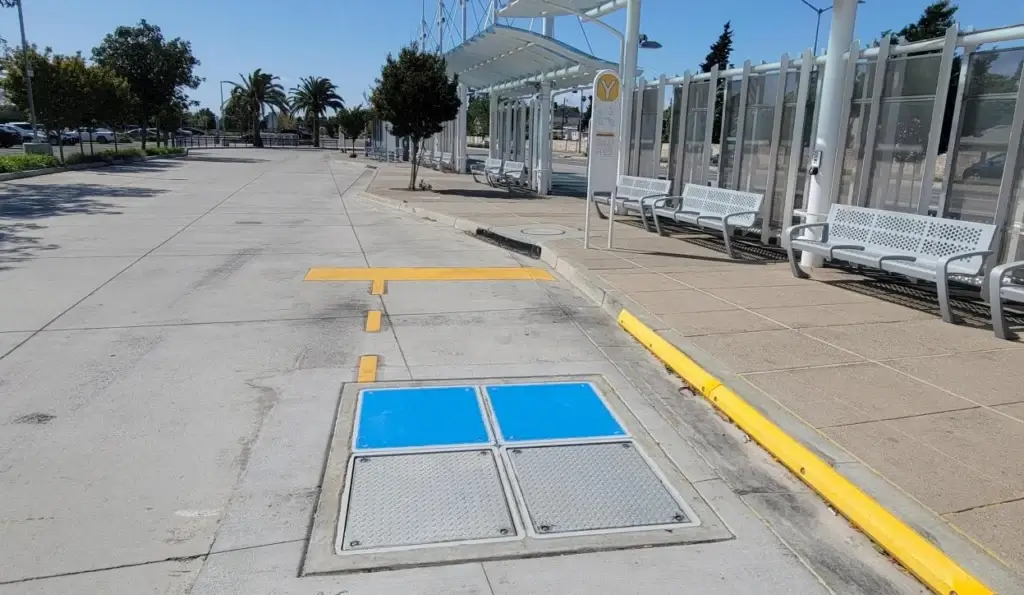
(Image: Wireless EV charging pads at a bus stop)
In-route wireless electric vehicle charging facilitates the use of smaller batteries
Using in-route wireless electric vehicle charging for urban bus fleets reduces the need for larger battery sizes often associated with wired charging. This is primarily due to the continuous ‘opportunity charging’ that wireless charging facilitates. As buses pause for passenger boarding and disembarking, even brief stops can serve as charging points. This constant replenishment of energy can maintain the battery at a high state of charge throughout the day, mitigating the necessity for a large battery capacity to store substantial energy.
Economic impact of smaller batteries and extended lifespan
Smaller batteries not only reduce the vehicle’s weight, promoting efficiency and reducing wear and tear, but they also decrease the cost, making the transition to electric buses more economically viable. Thus, in-route wireless EV charging reduces the need for larger batteries in electric buses, contributing to a more sustainable and economically superior public transportation system.
Further, the battery state of charge is kept in a narrow range (which is very difficult to do with wired chargers), which means that the battery life can be extended up to 8-fold, thus eliminating the cost of battery replacement and recycling for these bus fleets.
Better use of the grid and renewable energy
Because the AI-powered software system can decide when to charge based on the cost of energy, make predictions about weather changes in real-time, and predict the load on the grid, the vehicle can consume energy most economically, reducing the cost of energy and using the grid more efficiently. This is particularly useful in optimizing the use of renewable energy like wind and solar, which are more plentiful during the day.
The many benefits of switching to wirelessly charged battery electric buses
Electric buses, powered by in-route wireless charging, present an effective solution in the fight against climate change. Conventional fossil-fueled buses contribute significantly to greenhouse gas emissions and air pollution, exacerbating global warming. Switching to electric buses can drastically reduce these emissions. Moreover, if powered by renewable energy sources, the carbon footprint of electric buses can be minimized even further. These reductions in emissions aid in the fight against climate change, helping cities to meet their environmental targets and contributing to cleaner, healthier air for inhabitants. The move towards electric buses, using in-route wireless electric vehicle charging, is a significant step in creating sustainable public transportation systems, aligning with global efforts to mitigate climate change.


