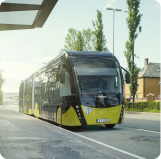
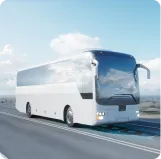
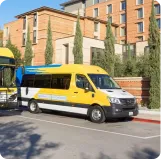
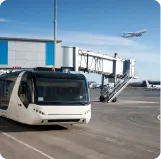
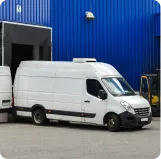
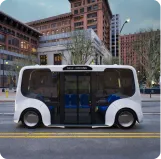
Wireless electric road technology is based on magnetic resonance induction, with copper coils installed under the roadway. The coils transfer energy to a receiver that can be mounted under any kind of electric vehicle, such as trucks, vans, buses and cars. Wireless charging can be installed absolutely anywhere as it does not have the same limitations as conductive (plug-in) charging. The technology can be deployed along public roads, tollways, motorways, bus routes, taxi lanes, in parking lots, and at commercial depot centers and parking lots.
This enables frequent ‘top-up’ or opportunity charging throughout fleet operational hours—typically during the day—and converts idle or ‘dead’ time into charging opportunities. This technology reduces the need for large batteries and extensive grid connection capacity, flattening the electricity demand curve, all of which significantly lowers costs and enables better management of transport energy.
Wireless electric road technology is based on magnetic resonance induction, with copper coils installed under the roadway. The coils transfer energy to a receiver that can be mounted under any kind of electric vehicle, such as trucks, vans, buses and cars. Wireless charging can be installed absolutely anywhere as it does not have the same limitations as conductive (plug-in) charging. The technology can be deployed along public roads, tollways, motorways, bus routes, taxi lanes, in parking lots, and at commercial depot centers and parking lots.
This enables frequent ‘top-up’ or opportunity charging throughout fleet operational hours—typically during the day—and converts idle or ‘dead’ time into charging opportunities. This technology reduces the need for large batteries and extensive grid connection capacity, flattening the electricity demand curve, all of which significantly lowers costs and enables better management of transport energy.
Wireless electric road technology is based on magnetic resonance induction, with copper coils installed under the roadway. The coils transfer energy to a receiver that can be mounted under any kind of electric vehicle, such as trucks, vans, buses and cars. Wireless charging can be installed absolutely anywhere as it does not have the same limitations as conductive (plug-in) charging. The technology can be deployed along public roads, tollways, motorways, bus routes, taxi lanes, in parking lots, and at commercial depot centers and parking lots.
This enables frequent ‘top-up’ or opportunity charging throughout fleet operational hours—typically during the day—and converts idle or ‘dead’ time into charging opportunities. This technology reduces the need for large batteries and extensive grid connection capacity, flattening the electricity demand curve, all of which significantly lowers costs and enables better management of transport energy.
Wireless electric road technology is based on magnetic resonance induction, with copper coils installed under the roadway. The coils transfer energy to a receiver that can be mounted under any kind of electric vehicle, such as trucks, vans, buses and cars. Wireless charging can be installed absolutely anywhere as it does not have the same limitations as conductive (plug-in) charging. The technology can be deployed along public roads, tollways, motorways, bus routes, taxi lanes, in parking lots, and at commercial depot centers and parking lots.
This enables frequent ‘top-up’ or opportunity charging throughout fleet operational hours—typically during the day—and converts idle or ‘dead’ time into charging opportunities. This technology reduces the need for large batteries and extensive grid connection capacity, flattening the electricity demand curve, all of which significantly lowers costs and enables better management of transport energy.
Wireless electric road technology is based on magnetic resonance induction, with copper coils installed under the roadway. The coils transfer energy to a receiver that can be mounted under any kind of electric vehicle, such as trucks, vans, buses and cars. Wireless charging can be installed absolutely anywhere as it does not have the same limitations as conductive (plug-in) charging. The technology can be deployed along public roads, tollways, motorways, bus routes, taxi lanes, in parking lots, and at commercial depot centers and parking lots.
This enables frequent ‘top-up’ or opportunity charging throughout fleet operational hours—typically during the day—and converts idle or ‘dead’ time into charging opportunities. This technology reduces the need for large batteries and extensive grid connection capacity, flattening the electricity demand curve, all of which significantly lowers costs and enables better management of transport energy.
Wireless electric road technology is based on magnetic resonance induction, with copper coils installed under the roadway. The coils transfer energy to a receiver that can be mounted under any kind of electric vehicle, such as trucks, vans, buses and cars. Wireless charging can be installed absolutely anywhere as it does not have the same limitations as conductive (plug-in) charging. The technology can be deployed along public roads, tollways, motorways, bus routes, taxi lanes, in parking lots, and at commercial depot centers and parking lots.
This enables frequent ‘top-up’ or opportunity charging throughout fleet operational hours—typically during the day—and converts idle or ‘dead’ time into charging opportunities. This technology reduces the need for large batteries and extensive grid connection capacity, flattening the electricity demand curve, all of which significantly lowers costs and enables better management of transport energy.
Wireless electric road technology is based on magnetic resonance induction, with copper coils installed under the roadway. The coils transfer energy to a receiver that can be mounted under any kind of electric vehicle, such as trucks, vans, buses and cars. Wireless charging can be installed absolutely anywhere as it does not have the same limitations as conductive (plug-in) charging. The technology can be deployed along public roads, tollways, motorways, bus routes, taxi lanes, in parking lots, and at commercial depot centers and parking lots.
This enables frequent ‘top-up’ or opportunity charging throughout fleet operational hours—typically during the day—and converts idle or ‘dead’ time into charging opportunities. This technology reduces the need for large batteries and extensive grid connection capacity, flattening the electricity demand curve, all of which significantly lowers costs and enables better management of transport energy.
Wireless electric road technology is based on magnetic resonance induction, with copper coils installed under the roadway. The coils transfer energy to a receiver that can be mounted under any kind of electric vehicle, such as trucks, vans, buses and cars. Wireless charging can be installed absolutely anywhere as it does not have the same limitations as conductive (plug-in) charging. The technology can be deployed along public roads, tollways, motorways, bus routes, taxi lanes, in parking lots, and at commercial depot centers and parking lots.
This enables frequent ‘top-up’ or opportunity charging throughout fleet operational hours—typically during the day—and converts idle or ‘dead’ time into charging opportunities. This technology reduces the need for large batteries and extensive grid connection capacity, flattening the electricity demand curve, all of which significantly lowers costs and enables better management of transport energy.
Wireless electric road technology is based on magnetic resonance induction, with copper coils installed under the roadway. The coils transfer energy to a receiver that can be mounted under any kind of electric vehicle, such as trucks, vans, buses and cars. Wireless charging can be installed absolutely anywhere as it does not have the same limitations as conductive (plug-in) charging. The technology can be deployed along public roads, tollways, motorways, bus routes, taxi lanes, in parking lots, and at commercial depot centers and parking lots.
This enables frequent ‘top-up’ or opportunity charging throughout fleet operational hours—typically during the day—and converts idle or ‘dead’ time into charging opportunities. This technology reduces the need for large batteries and extensive grid connection capacity, flattening the electricity demand curve, all of which significantly lowers costs and enables better management of transport energy.
Wireless electric road technology is based on magnetic resonance induction, with copper coils installed under the roadway. The coils transfer energy to a receiver that can be mounted under any kind of electric vehicle, such as trucks, vans, buses and cars. Wireless charging can be installed absolutely anywhere as it does not have the same limitations as conductive (plug-in) charging. The technology can be deployed along public roads, tollways, motorways, bus routes, taxi lanes, in parking lots, and at commercial depot centers and parking lots.
This enables frequent ‘top-up’ or opportunity charging throughout fleet operational hours—typically during the day—and converts idle or ‘dead’ time into charging opportunities. This technology reduces the need for large batteries and extensive grid connection capacity, flattening the electricity demand curve, all of which significantly lowers costs and enables better management of transport energy.
Learn more about our environmentally sustainable, scalable, and compelling charging solutions.
Be the first to hear about new projects, technology breakthroughs, and insights from the world of wireless EV charging.
👉 Sign up to receive Electreon updates.
We’ll only send what matters. No spam.
Charges electric vehicles while they drive on equipped streets and highways
Charges electric vehicles while boarding passengers or crawling in traffic
Charges electric vehicles when parked or stopped
Intelligent software for real-time energy flow insights