(ERS T) Aftermarket receiver kit showcases how EVs power up wirelessly on the go
Germany
Aldenhoven, Western Germany
Wireless receiver kit—retrofitted or factory-installed—accelerates EV adoption
In the small town of Aldenhoven, Western Germany, cars glide down a city street while charging wirelessly, drawing power directly from the road.
This project is part of ERS.T-NRW, a research initiative funded by the state of North Rhine-Westphalia and the EU. Leading the effort is the University of Wuppertal, joined by a dream team: Electreon Germany supplying the wireless charging tech, DENSO Automotive Deutschland GmbH contributing vehicle systems and components, and STRABAG bringing its construction expertise.
A road equipped with Electreon’s embedded coils enables vehicles to charge while parked—or on the move. At the heart of the project is Electreon’s new aftermarket receiver kit: a flexible, vehicle-agnostic solution that can be easily installed in different EVs. Researchers are now putting it through its paces—measuring energy transfer, making precise engineering improvements, and ensuring secure, reliable communication between vehicle and road.
The goal? To show that the system works under real-world traffic conditions and can be applied not just in new models but also in the millions of EVs already on the road.
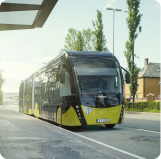
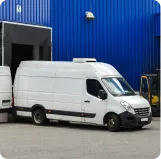
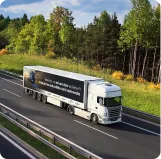
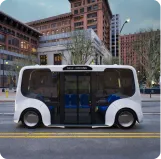
Wireless charging on the go could be a game-changer for taxis, buses, and delivery fleets—vehicles that lose time and money every minute they stop to charge. By keeping them moving, wireless charging delivers a level of convenience even fossil-fuel cars can’t match.
The project is also helping to set international standards for how wireless charging will be used worldwide. Once proven, the aftermarket kit can be easily retrofitted into existing vehicles or installed directly on the assembly line for new models. This flexibility will speed up adoption, making it simple for more fleets and drivers to charge on the go and keep their vehicles topped up. With strong partners alongside, the technology is on track to become a cornerstone of the future of electric transport in Europe and beyond.
What our partners are saying
Prof Benedikt Schmülling
head of the project at the University of Wuppertal
“Wireless charging while driving and even when stationary makes electromobility more convenient and therefore more suitable for everyday use – especially in urban areas or for vehicles with high energy requirements. Our aim is to develop this technology in such a way that it functions reliably, can be easily integrated into infrastructures and makes a real contribution to the transport transition.”
Want to see your EVs powered wirelessly—retrofitted or factory-installed? Ask us how.